
Hidden Economics of Plant Failure on Construction Projects
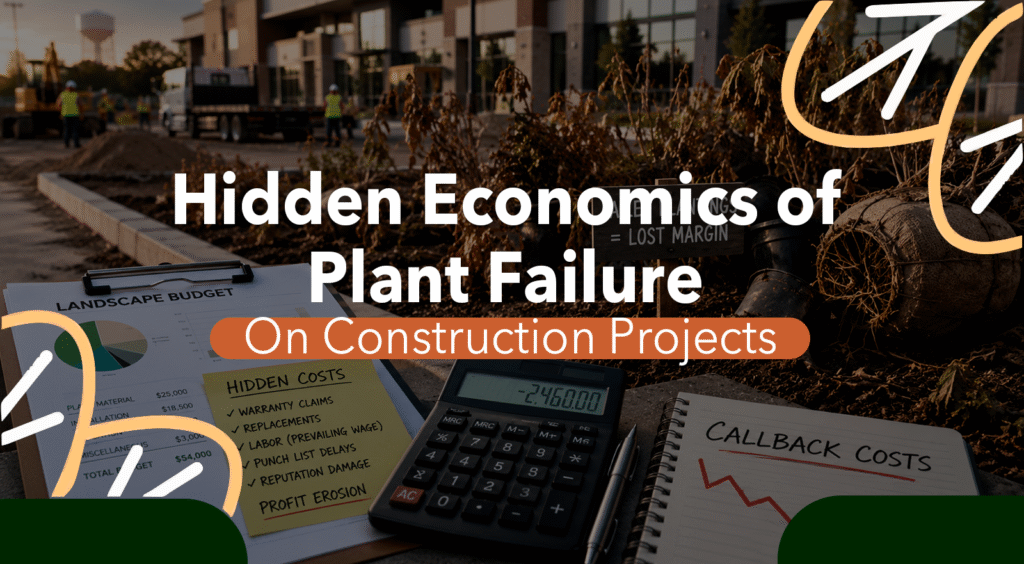
Hidden Economics of Plant Failure on Construction Projects
Plant failure on Illinois construction projects doesn’t just look bad — it eats margin long after the job is supposed to be done. For developers and GCs, it shows up as warranty claims, punch list delays, and HOA complaints. For landscapers, it means free callbacks at prevailing wage.
Most failures aren’t bad luck. They’re economics: wrong plant for the site, undersized material, or no acclimation to Illinois conditions. Here’s what it actually costs and how to avoid it.
The real cost of plant failure in Illinois
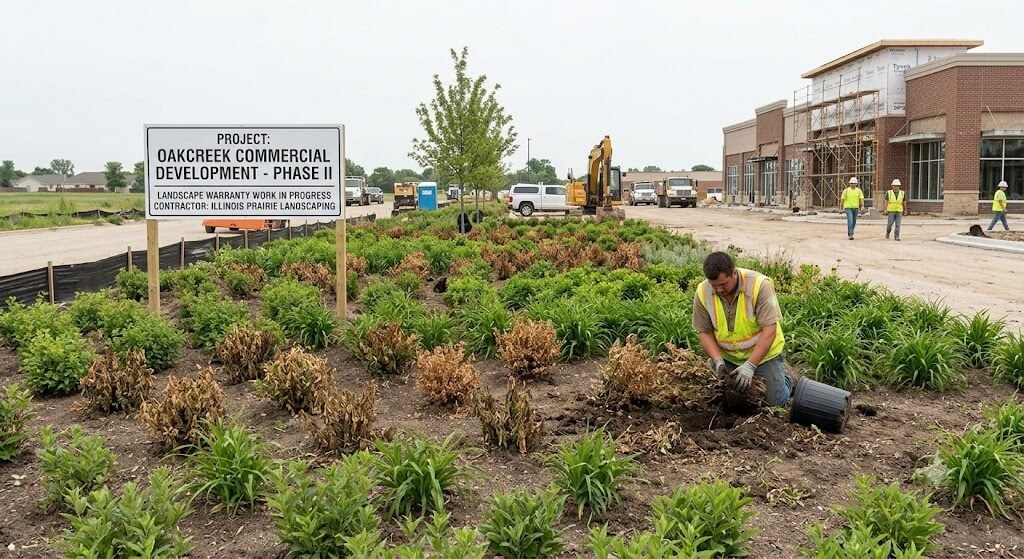
Callback Costs
Scenario: New commercial site, 500-plant install, 1-year landscape warranty.
Plant failure rate with marginal stock: 20% = 100 dead plants.
- Plants: 100 x $6 = $600
- Labor: 100 x 0.3 hr x $52/hr prevailing wage = $1,560
- Mobilization: Crew travel, disposal, irrigation reset = $300
Total callback: $2,460
That’s 12% of your original plant budget, paid out of profit, 9 months after you thought the job was closed.
Indirect Costs
The financial bleed doesn't stop at the replacement plants:
- Punch list delays: Client won’t sign off, holding retention.
- HOA/developer frustration: Future work at risk.
- Reputation: “Their plants died” spreads faster than “they saved $1/plant”.
Why Illinois construction sites kill plants
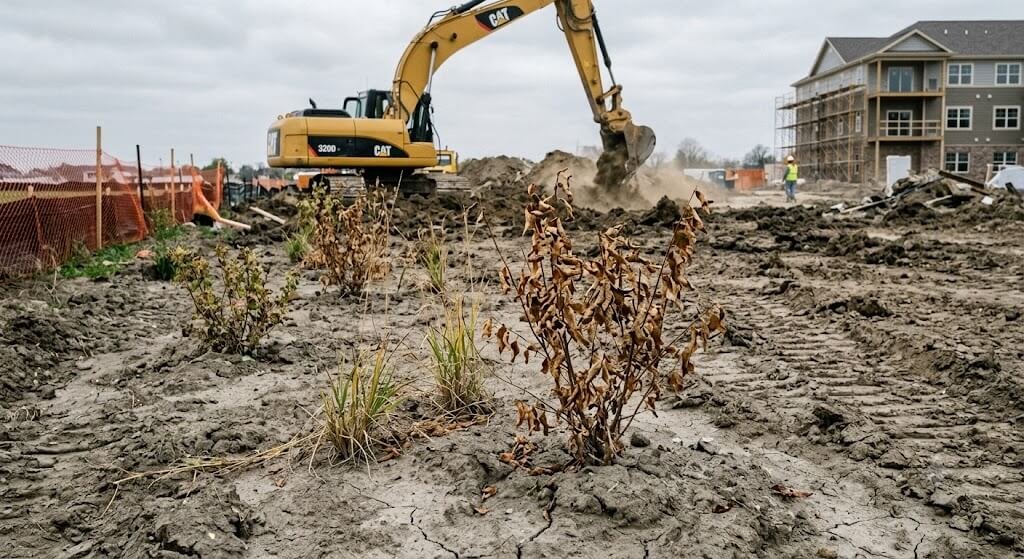
Construction grading leaves subsoil. Plants starve and fail in year 1.
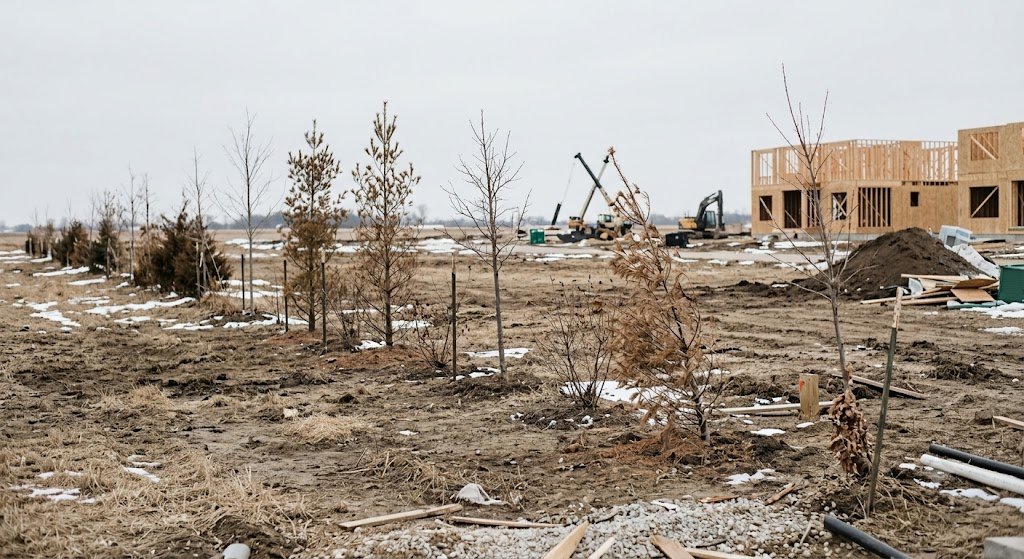
New sites have no windbreak. Winter desiccation + summer heat stress = losses.
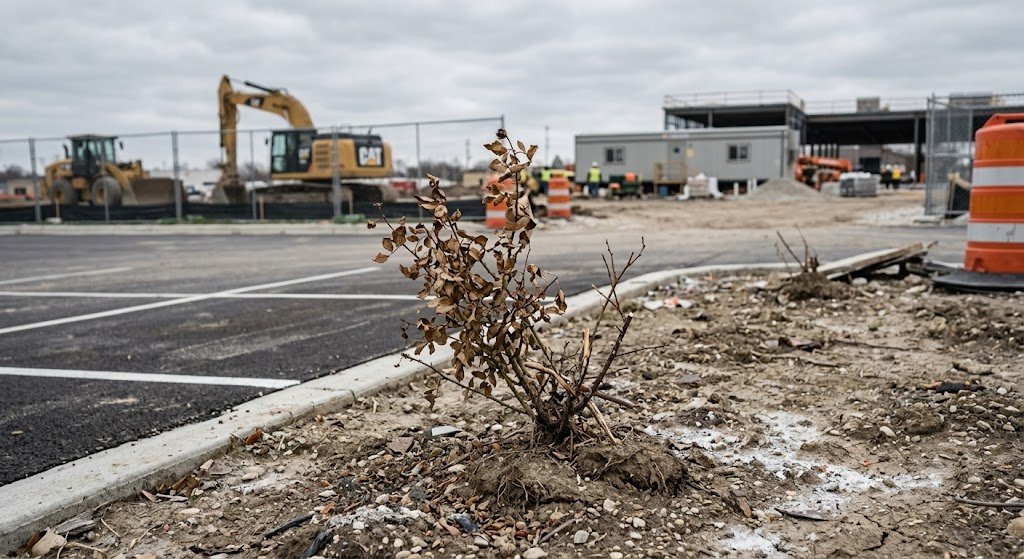
Full-sun ornamental put in a wind-swept, salted corner by the parking lot.
Combine that with undersized, soft stock that isn’t hardened off for Zone 5a/5b, and you’ve got a failure guarantee.
The economics of prevention
Spend more upfront, lose less later:
| Approach | Upfront Plant Cost | Expected Loss | Callback Cost | Total 1-Yr Cost |
|---|---|---|---|---|
| Low bid, soft stock | $3,000 | 20% | $2,460 | $5,460 |
| Illinois-hardened, right-spec | $3,600 | 6% | $738 | $4,338 |
Spending 20% more on plant material saved $1,122 per 500 plants. On a 2,000-plant project, that’s $4,488 protected margin.
Prevention tactics that pay
Soil spec
Require amended soil or soil volume guidelines.
Right-size material
Larger caliper trees establish faster.
Illinois-acclimated
Locally hardened plants handle exposure better.
Species selection
Use tough natives for exposed areas.

How to build this into your bid and contract
- Call out warranty terms: Specify plant size, species, and source.
- Include establishment care: 1 season of irrigation/weeding dramatically reduces failure.
- Source from Illinois growers: Locally grown or overwintered stock reduces transplant shock.
Goal: plants that survive to final sign-off, so you’re not back on site doing free work in July.
Working on a Illinois construction project? Send us your plant schedule and site conditions. We’ll recommend a failure-resistant spec + trade quote to protect your margin through warranty.
Email us or give us a call.








Leave a Reply