
Native Plant Gardens: The #1 Trend Illinois Homeowners Love in 2026
Native Plant Gardens: The #1 Trend Illinois Homeowners Love in 2026
Why “native” is the new luxury in Illinois
Illinois homeowners want a yard that supports bees, needs less water and still looks beautifully intentional. Native plant gardens deliver all three without sacrificing curb appeal.
The best modern native gardens do not look wild or unfinished. They use color, texture, seasonal rhythm and thoughtful structure to create a landscape that works with Illinois instead of fighting it.
What Native Actually Means in Illinois
A native plant is one that evolved in this region before European settlement, alongside Illinois soil, weather patterns and wildlife. That long relationship matters: plants adapted to zones 5a–6b are prepared for hard winters, humid summers, clay soil, drought and spring storms.
Native does not mean “one look.” Illinois includes prairie, woodland and wetland habitats, so a native palette can be sunny and colorful, softly shaded, or lush and moisture-loving. The design goal is to choose the right plant for the right place.
Prairie
Big Bluestem, Purple Coneflower and Wild Bergamot bring height, movement and long summer color to sunny sites.
Woodland
Wild Columbine, Jacob’s Ladder and Foamflower thrive in filtered light beneath trees and along shaded paths.
Wetland
Swamp Milkweed, Joe Pye Weed and Blue Flag Iris turn damp areas into productive habitat instead of a drainage problem.
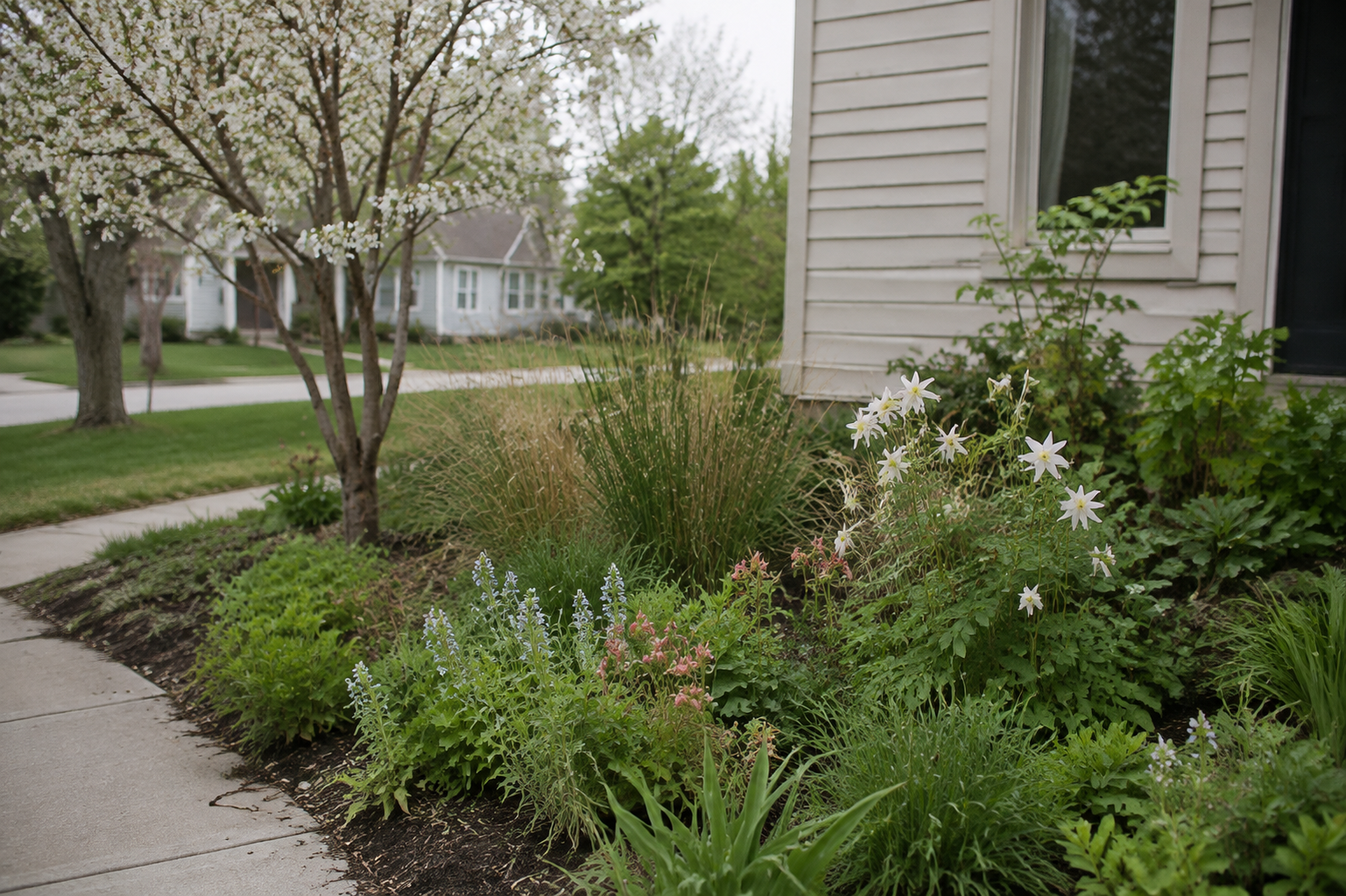
The difference between a forgotten patch and a luxury landscape is design. Repeat a few strong plants in generous drifts, frame the bed with clean edges, and balance flowers with grasses, shrubs and trees.
That approach gives the garden a clear visual language from the street while still creating food and shelter for pollinators.
15 Native Plants for Every Illinois Season
Use the list below as a starting palette, then match each plant to the site’s sun, moisture and soil conditions. A four-season garden is planned by bloom time, foliage, fruit, bark and seed heads—not just by what looks good in June.
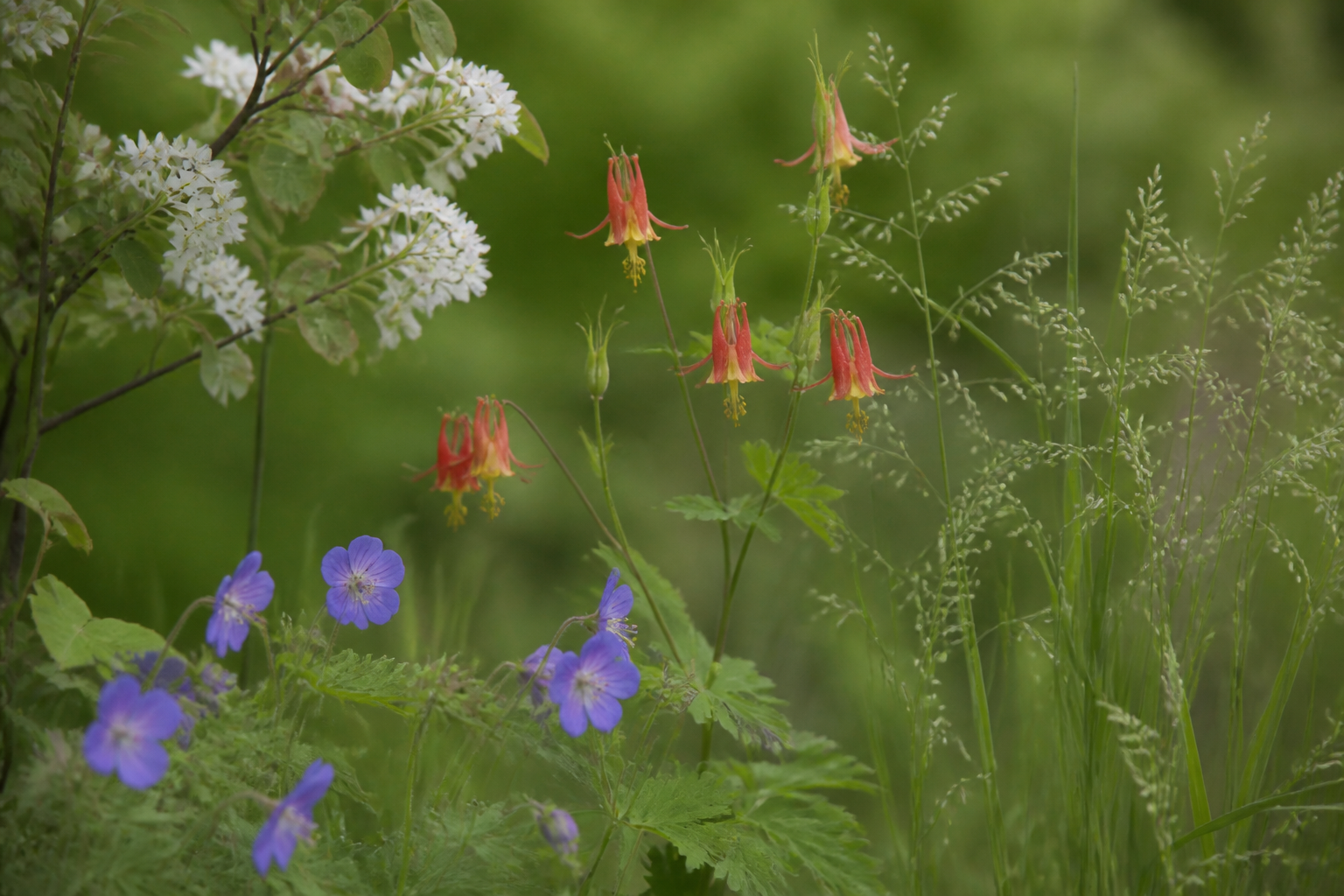
- Spring: Wild Columbine (Aquilegia canadensis), Jacob’s Ladder (Polemonium reptans) and Serviceberry (Amelanchier).
- Summer: Purple Coneflower (Echinacea purpurea), Wild Bergamot (Monarda fistulosa), Black-eyed Susan (Rudbeckia hirta) and Swamp Milkweed (Asclepias incarnata).
- Fall: New England Aster (Symphyotrichum novae-angliae), Goldenrod (Solidago) and Little Bluestem (Schizachyrium scoparium).
- Winter: Switchgrass (Panicum virgatum), Red Twig Dogwood (Cornus sericea) and Oakleaf Hydrangea (Hydrangea quercifolia).
- Small-yard bonuses: Prairie Dropseed (Sporobolus heterolepis) and Wild Geranium (Geranium maculatum).
Pro landscaper tip: sell and plant in “drifts.” Groups of five to seven of one species look more professional than one of everything—and they create a stronger signal for pollinators.
The 3 Benefits Homeowners Notice Fast
Less water and work
After the establishment period, a well-planned native garden can use up to 80% less supplemental water and maintenance. The first year takes care; the second year builds confidence; the third year is when the landscape starts carrying itself.
More living habitat
Native flowers, stems, seeds and berries support bees, butterflies, birds and other wildlife at the moments they need food and shelter most.
Fewer chemicals
Plants suited to the site are less dependent on routine rescue treatments. That means fewer inputs, fewer replacements and fewer maintenance callbacks for landscapers.
How to Install a Native Garden That Thrives
Native plants are resilient, but “low maintenance” does not mean “plant and forget.” The installation and first-year plan determine whether the garden becomes a reliable asset or a disappointing experiment.
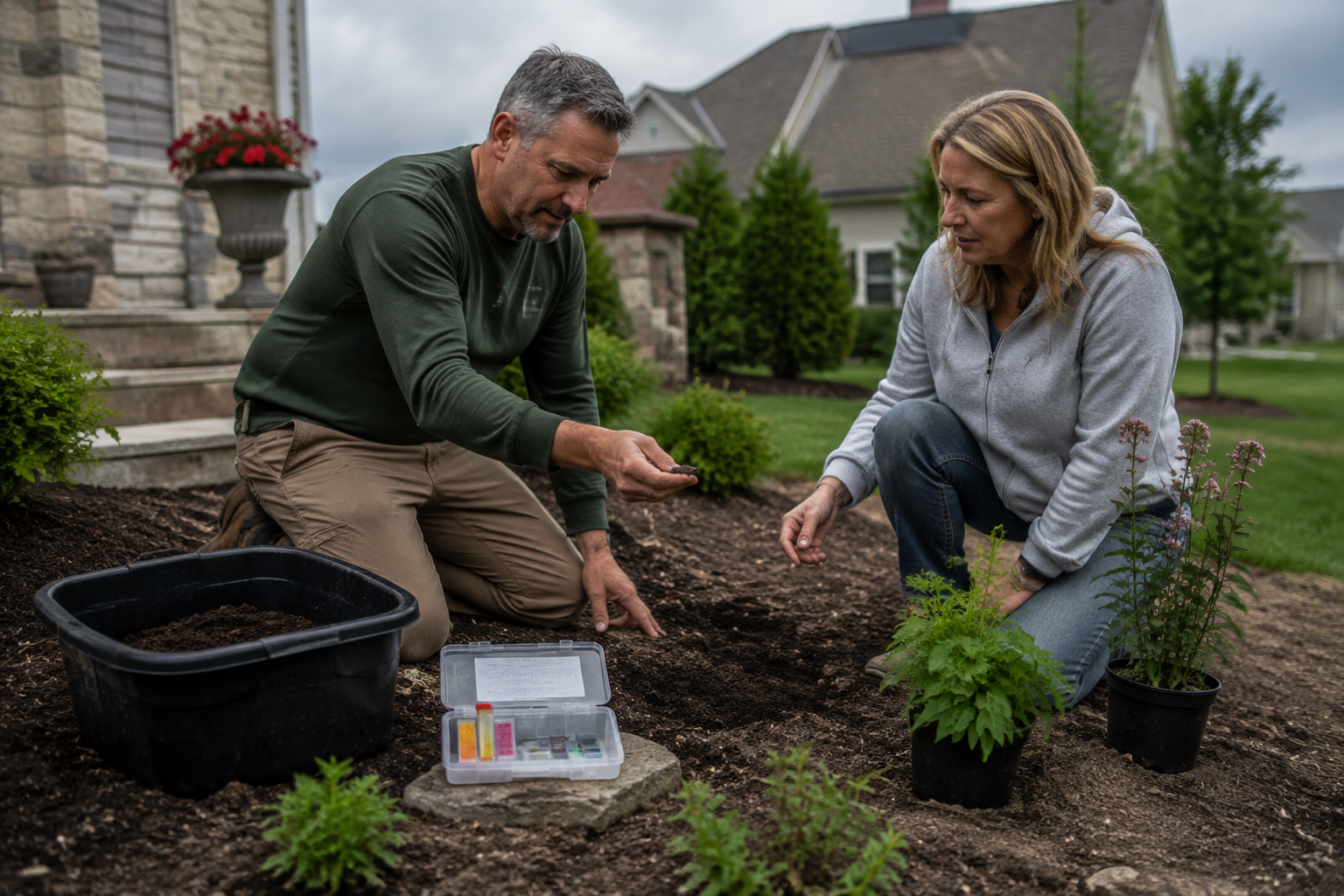
- Analyze the site: Test the soil, understand the Illinois clay, add compost where needed and use berms or grading to improve drainage.
- Source locally: Choose plants from Illinois growers and local genotypes whenever possible so the palette is truly adapted.
- Design for four seasons: Map bloom times and keep roughly 30% grasses or evergreen structure so the garden has shape after flowers fade.
- Protect year one: Follow “Sleep, Creep, Leap.” Use drip irrigation and schedule three maintenance visits while roots establish.
- Educate the homeowner: Explain that seed heads and stems should remain through fall and winter unless there is a safety reason to remove them.
“Will It Look Messy?” Not When It Is Designed
This is the most common objection—and the easiest one to solve. A modern native garden is intentional. It uses boundaries, repetition and focal points so the planting feels curated rather than accidental.
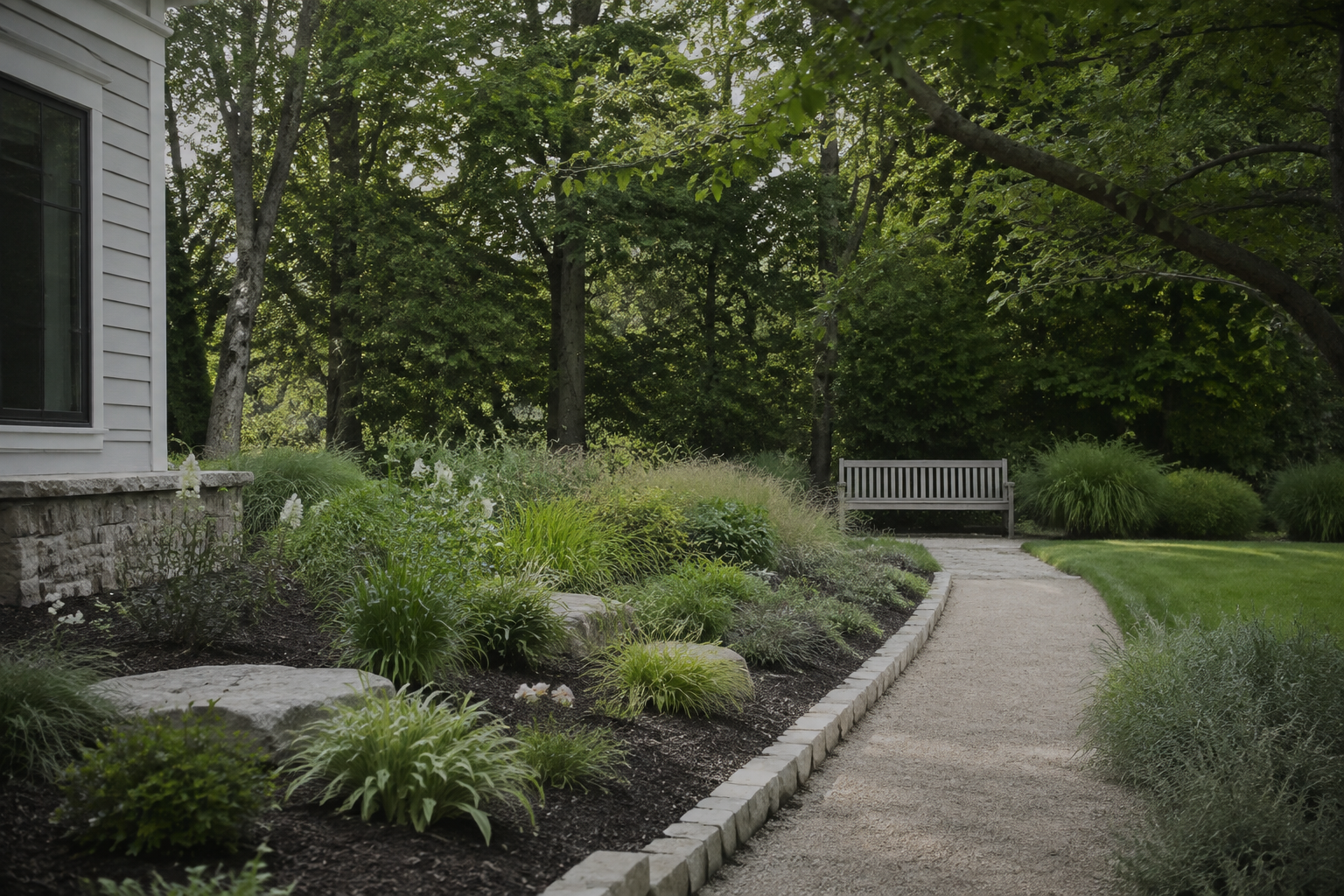
- Use stone edging and clean mulch lines to define the garden.
- Mix natives with one or two noninvasive ornamentals when a client wants a specific color or form.
- Add a focal boulder, bird bath or bench to anchor the composition.
- Keep about 50% lawn when the family needs play space for kids and dogs.
The finished-garden checklist
- Plants are grouped in deliberate drifts.
- Every layer has a job: groundcover, perennial, grass, shrub or tree.
- Edges and pathways make the wild feel intentional.
- Seed heads and winter structure are part of the design.
- The client knows what to expect during year one.
- Watering can taper as roots establish.
Native plant gardens are not a compromise. They are the next level of Illinois landscape design.
They look polished, perform through Midwest weather and give homeowners a yard that becomes easier to care for over time. If you are ready to plan a native garden that fits your property, your lifestyle and your neighborhood, start with the full guide and connect with Woody’s Plant Nursery.







Leave a Reply