
Prevailing Wage in Illinois: How Plant Specs Can Cut Labor Cost on Public Jobs
Prevailing Wage in Illinois: How Plant Specs Can Cut Labor Cost on Public Jobs
If you’re bidding for Illinois public work in 2026, you already know the math is brutal. Prevailing wage for landscape labor in Cook County and most of northern Illinois sits at $45–$60/hr fully loaded. That’s not your bid rate — that’s the minimum you have to pay crew doing maintenance on city, park district, and school projects.
One wrong plant spec can turn a profitable job into a 5-year maintenance sinkhole. Here’s how to use plant selection to protect your margin.
Why Illinois public jobs punish high-maintenance planting
Prevailing wage doesn’t scale down for weeding, pruning, or watering. Whether you’re pulling weeds or planting a tree, you’re paying the same hourly rate.
Example: A typical 1-acre park planting in Illinois
| Spec Type | Details & Calculation | Annual Cost |
|---|---|---|
| High-maintenance spec | Mixed annuals, thirsty exotics, formal beds = ∼12 hrs/week maintenance x 28 weeks x $50/hr |
$16,800/yr |
| Low-maintenance spec | Illinois-adapted natives, massed groundcover, fewer lawn edges = ∼5 hrs/week maintenance x 28 weeks x $50/hr |
$7,000/yr |
That’s $9,800/yr saved just from the plant list. Over a 5-year contract, you’re looking at nearly $50k difference in labor cost.
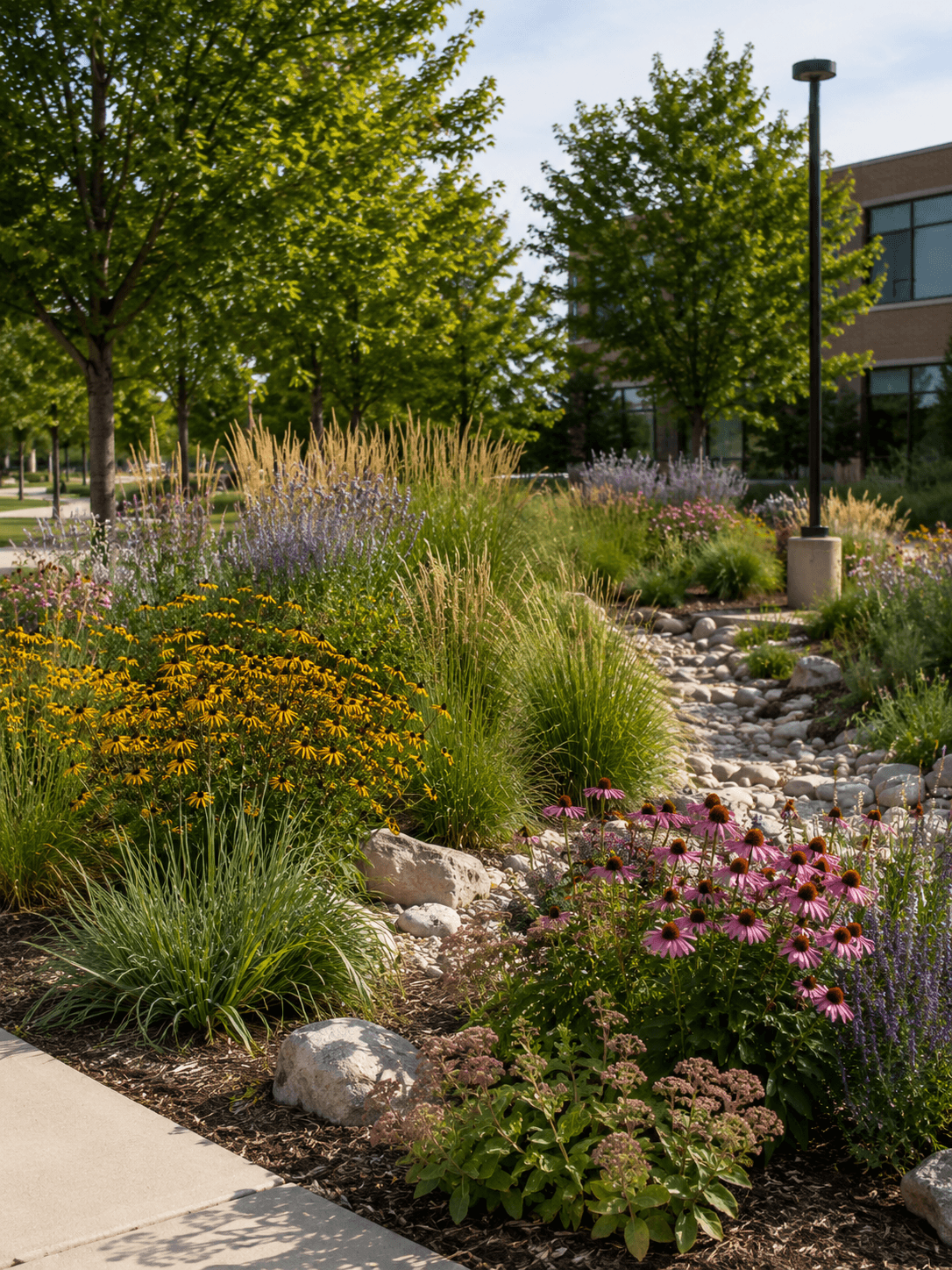
For Illinois public sites, low-maintenance means:
- Native or Illinois-adapted species that survive freeze-thaw and clay soils without constant inputs
- Mass plantings instead of fussy specimen arrangements — less edging, less hand-weeding
- Right plant, right place — drought-tolerant plants in dry swales, not irrigated turf
- Fewer high-trim plants — shrubs that don’t need annual shearing to look tidy
Chicago’s Sustainable Backyards program and many suburban park districts now push this spec because they’re paying prevailing wage too. If your bid ignores it, you’re either overpricing or eating the maintenance cost later.
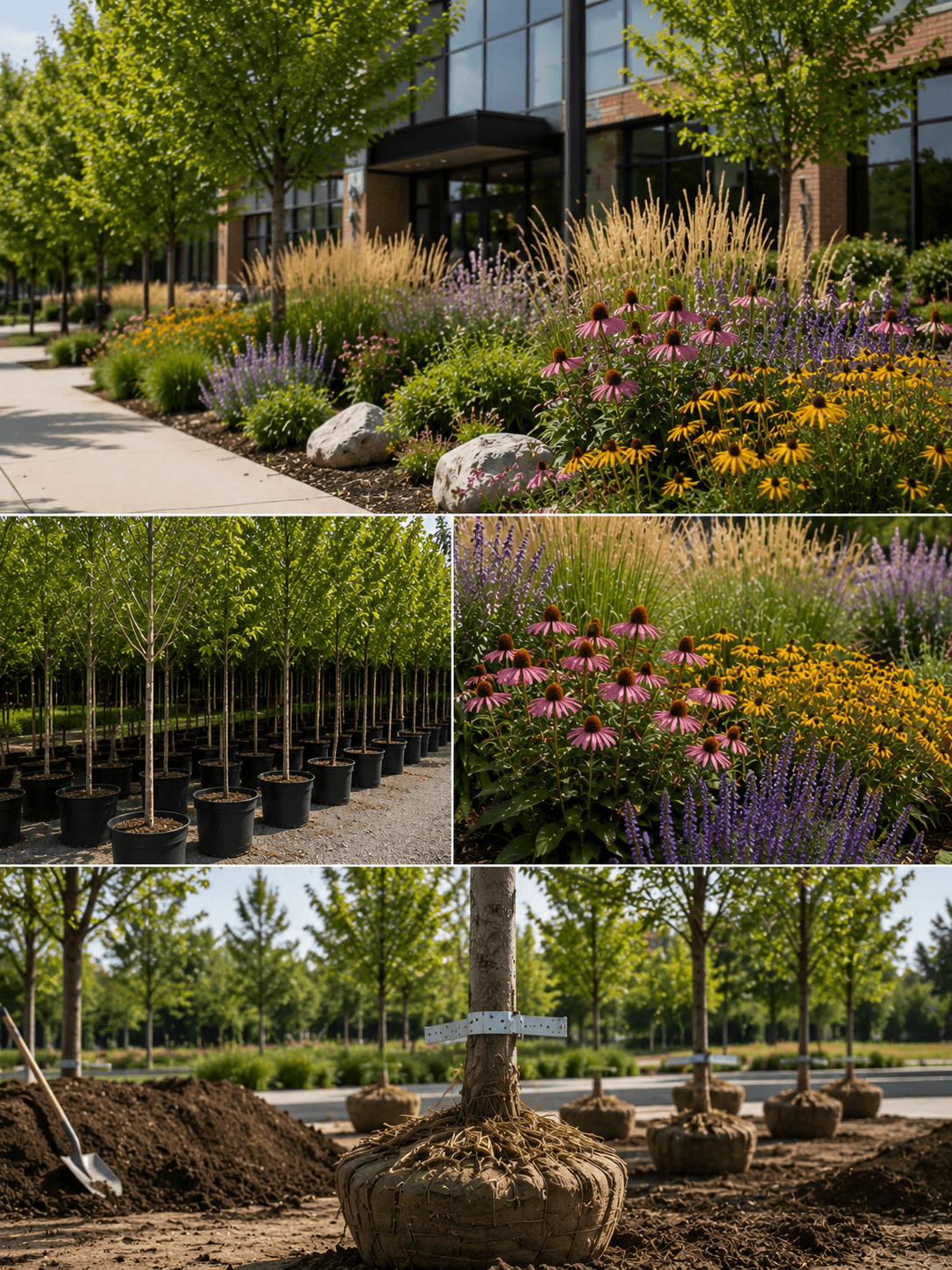
Some contractors spec cheap, fast-growing plants to win the bid, then get hammered on maintenance. Others over-spec advanced material and lose the job.
The Illinois-savvy approach:
- Use Illinois-hardy, nursery-hardened stock that establishes fast. You pay a bit more upfront, but avoid spring replacements when winter kill hits.
- Specify 3–5 core native species in volume instead of 15 different ornamentals. Crews maintain it faster, and you buy in bulk at better rates.
- Choose advanced trees that meet city caliper requirements upfront. Chicago’s tree ordinance requires replacement calipers — undersized trees get rejected, and rework at prevailing wage is expensive.
How to build this into your bid
When you’re quoting an Illinois public job:
- Ask the client for maintenance budget expectations. If they’re under prevailing wage pressure, they’ll care about this.
- Propose a low-maintenance plant list and show the 5-year labor savings. Even a 20% cut in maintenance hours is a compelling number.
- Source from a nursery that stocks Illinois-adapted, hardened-off plants. Dead stock = callbacks at $50+/hr.
How we help Illinois contractors
We grow and stock plants specifically for Illinois conditions:
- Cook County-approved species for park district and municipal work
- Hardened-off tubestock and advanced material that survives Zone 5a/5b winters
- Bulk pricing on core natives so you can spec mass plantings without blowing the plant budget
We’ll also provide plant lists that meet Chicago DOT and suburban ordinance requirements — so your submittal doesn’t get kicked back.








Leave a Reply