
Vital Tools for the Landscaping Industry: What Commercial Crews Actually Rely On
Vital Tools for the Landscaping Industry
What Commercial Crews Actually Rely On
If you’re running a landscaping business, your tools are your production line. Downtime costs money, bad equipment kills margins, and the wrong gear slows crews down when you’re bidding against 5 other companies for the same job. This isn’t about “what looks good in the shed.” It’s about what holds up on 40-hour weeks, keeps crews safe, and lets you finish jobs on schedule.
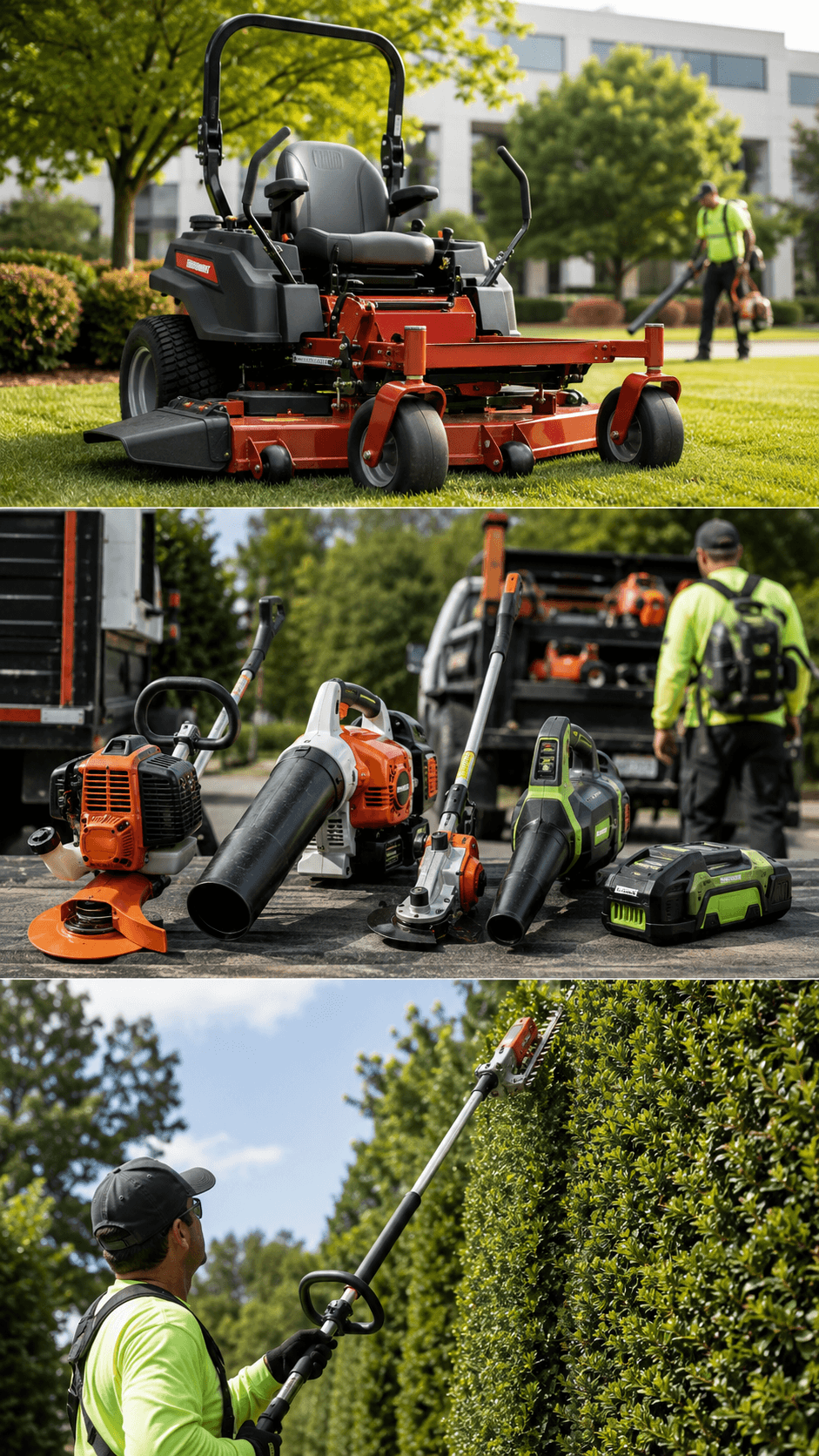
Commercial Zero-Turn Mowers For any crew handling >2 acres/day, a residential mower won’t last a season. Commercial zero-turns with 60-72” decks, heavy-duty transmissions, and suspended seats are standard. Look for serviceable decks and easily replaceable spindles — you’ll be swapping blades weekly in peak season. Business angle: Fuel efficiency and cut quality directly impact labor hours. A mower that cuts 10% faster pays for itself in 3 months.
Handheld Power Tools: Trimmers, Blowers, Edgers Gas still dominates for all-day runtime, but battery platforms are catching up for smaller sites where noise restrictions exist. Key for B2B: battery ecosystem. Stick to one brand across crews so batteries and chargers are interchangeable. What to watch: Vibration dampening and weight. Crew turnover is high when guys are dealing with hand-arm vibration syndrome after 6 months.
Hedge Trimmers & Pole Saws For maintenance contracts with shrubs and trees, articulating pole saws and long-reach hedge trimmers cut labor time in half vs. ladders. Make sure they’re commercial-grade — homeowner units snap under daily use.
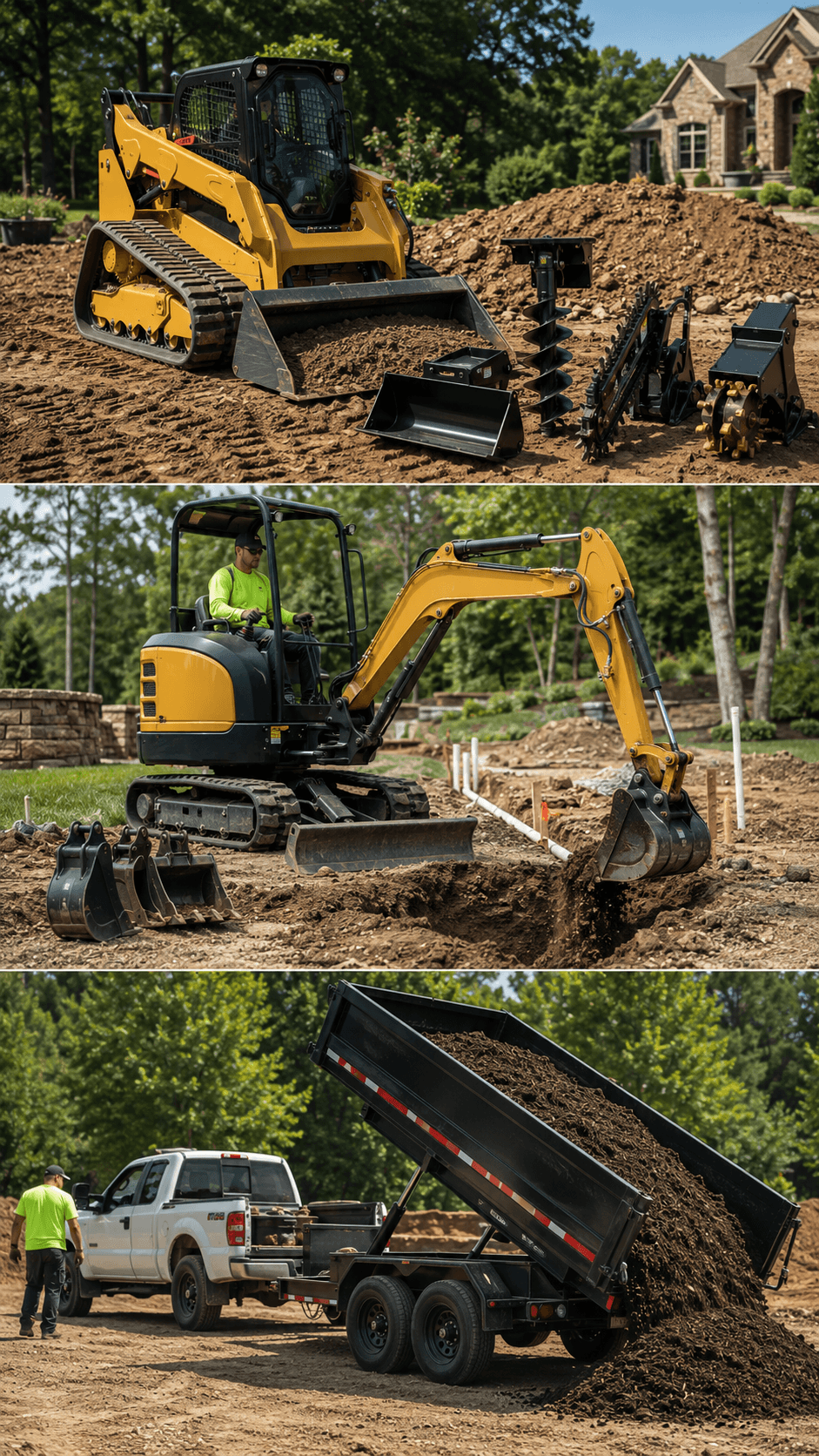
Skid Steers & Compact Track Loaders The Swiss Army knife of landscaping. Grading, material moving, stump removal, trenching with attachments. For commercial crews, rubber tracks > wheels if you’re working on turf or wet sites. ROI tip: An attachment fleet is cheaper than renting. Plan for bucket, auger, trencher, and stump grinder at minimum.
Mini Excavators Any job with drainage, irrigation, or hardscaping needs one. 2-3 ton machines fit through gates but have enough power for serious work. Quick-coupler systems save 20-30 min per attachment change.
Dump Trailers & Trucks You’re moving soil, mulch, debris daily. A 14k GVWR dump trailer with electric over hydraulic lift reduces crew strain and gets you off site faster. Pair with a 1-ton truck for payload capacity. Business reality: Transport time is non-billable. Faster load/unload = more billable hours.
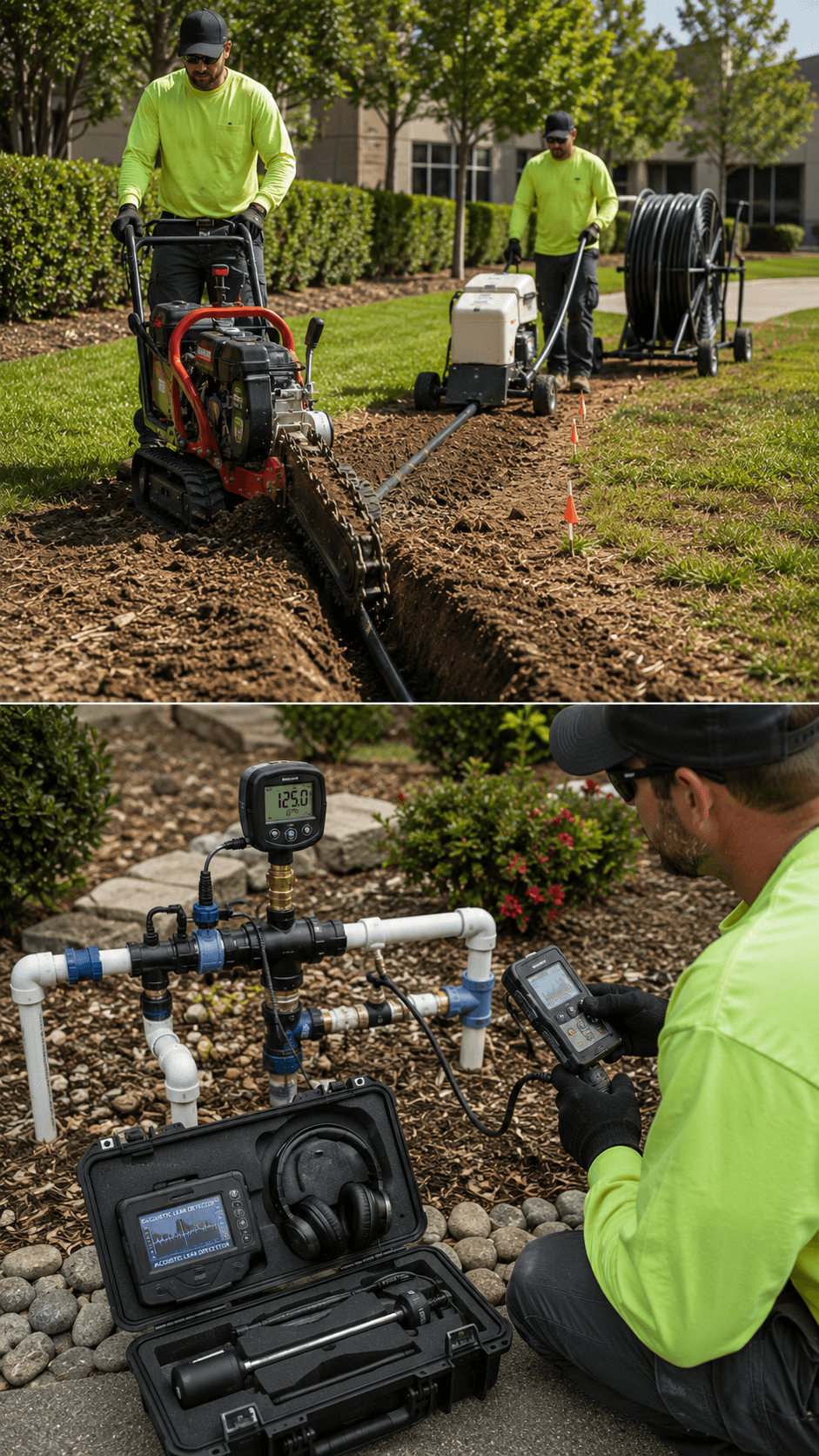
Trenchers & Vibratory Plows Hand-digging irrigation lines on commercial jobs is a non-starter. Walk-behind trenchers and vibratory plows let 2 guys install 1000ft/day.
Pressure Testers & Leak Detectors For maintenance contracts, finding leaks fast saves water bills and keeps clients happy. Digital flow meters and acoustic leak detectors pay for themselves after 2-3 saves.
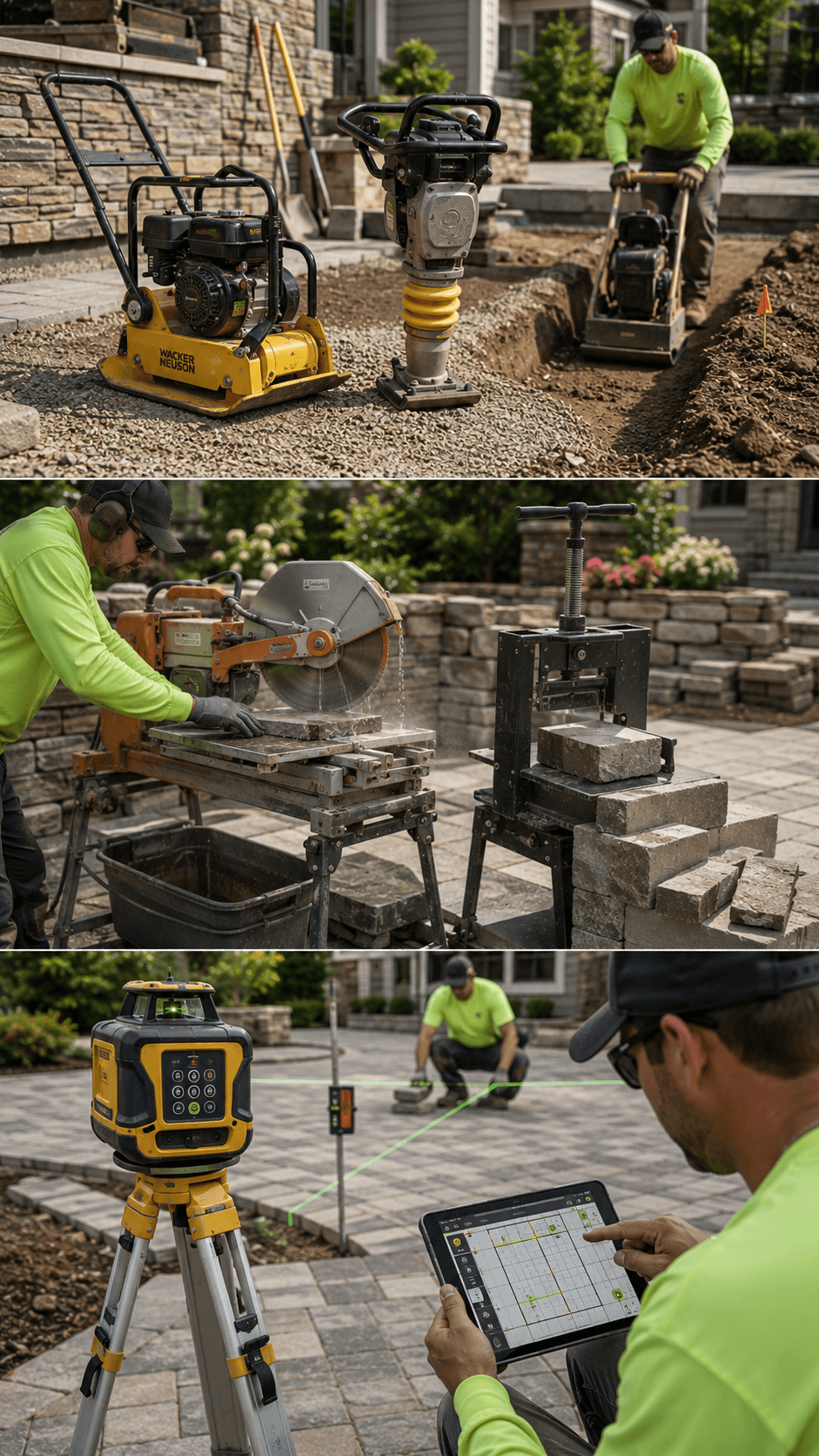
Plate Compactors & Jumping Jacks No client wants a patio that settles in 6 months. Plate compactors for base prep, jumping jacks for trenches. Gas-powered for power, electric for indoor/quiet sites.
Masonry Saws & Splitters For stone, pavers, retaining walls. Wet saws with diamond blades give clean cuts. A good splitter saves blades and reduces dust.
Laser Levels & Layout Tools Accuracy matters when you’re installing 5000 sq ft of pavers. Rotary lasers and layout apps cut rework. Rework is profit loss.
Choosing Tools: The Business Owner’s Checklist
When evaluating gear, stop asking “how much is it?” and start asking:
| Factor | Consideration |
|---|---|
| Cost per hour of use: | $8,000 mower used 800 hrs/year = $10/hr before fuel/maintenance. Compared to labor savings. |
| Downtime cost: | If a $300 trimmer breaks and takes a crew offline for 2 days, you lost $1,600 in labor. Buy commercials. |
| Serviceability: | Can your mechanic fix it in-house? Wait time for dealer service kills schedules. |
| Training curve: | Complex gear needs training. Simpler = faster onboarding for new hires. |
| Resale value: | Commercial brands hold value. You’ll replace it in 3-5 years anyway. |
Maintenance: The Unsexy Profit Protector
A $50k skid steer that’s down 2 weeks during peak season costs you more than the machine.
- Daily: Grease, check fluids, clean air filters.
- Weekly: Inspect blades, belts, hydraulic hoses.
- Monthly: Full service interval.
Log everything. If you sell a piece of equipment later, maintenance records add 15-20% to resale value.
Safety & Crew Management Gear
PPE That Actually Gets Worn
Ear protection, safety glasses, cut-resistant gloves, steel-toe boots. If it’s uncomfortable, crews won’t wear it. OSHA fines are expensive, but crew injury is worse.
Fleet Tracking & Telematics
For businesses with 3+ vehicles/machines, GPS and telematics show where equipment is, hours run, and maintenance needs. Cuts theft and prevents missed service intervals.
Mobile Apps for Job Management
Paper work orders don’t scale. Tools like Jobber, LMN, Aspire let crews log hours, take photos, and get change orders in real time. The tool doesn’t swing a shovel, but it keeps the job profitable.
Final Word
The landscaping businesses that scale aren’t the ones with the cheapest tools. They’re the ones with the right tools, maintained well, used by crews who know how to run them. Every tool should either make you money, save you time, or reduce risk. If it doesn’t do one of those, it’s just inventory.









Leave a Reply